What is a chatbot?

What are they capable of?

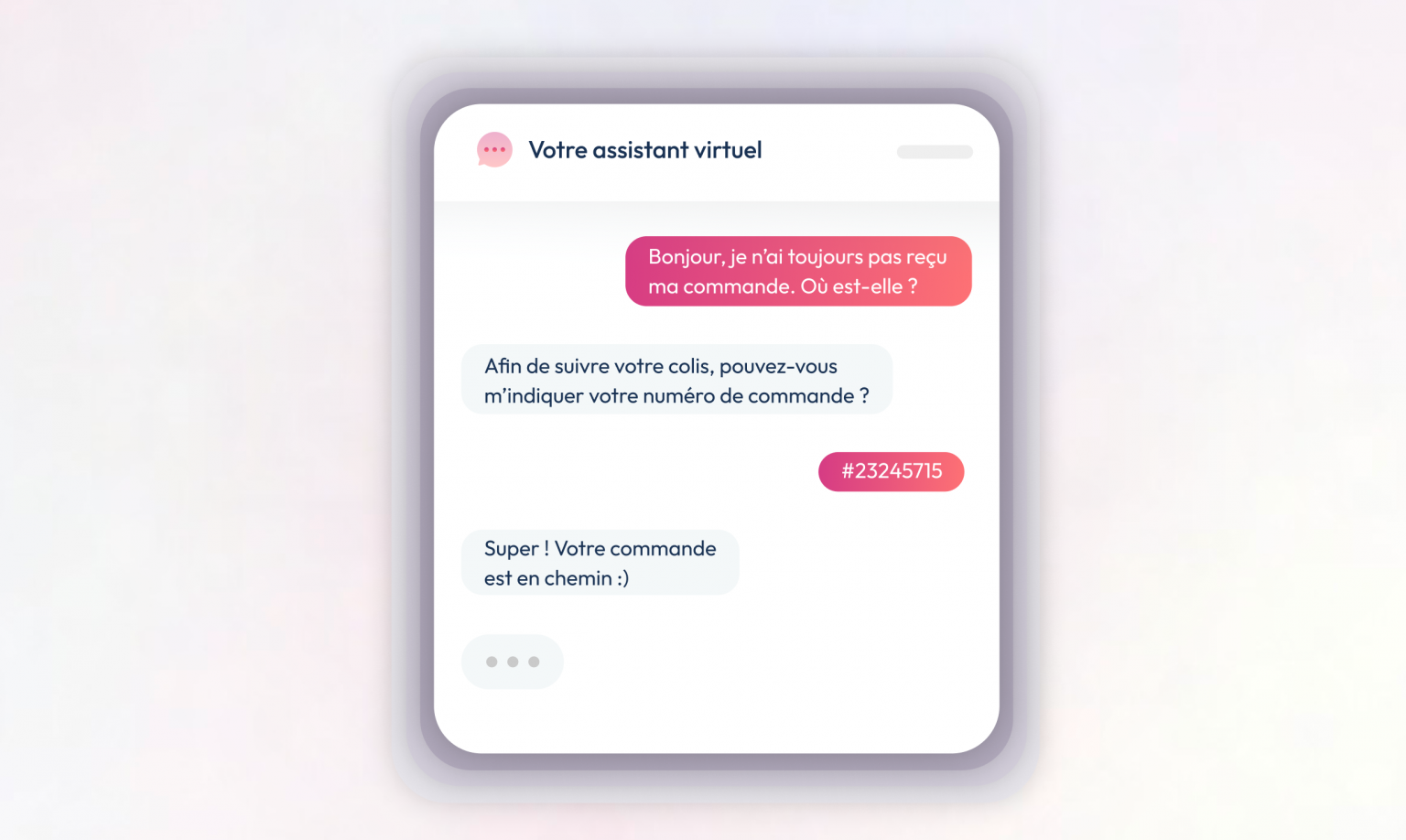
Chatbots communicate with multiple users simultaneously.
They provide automatic responses according to various criteria. They are used in customer support, sales, and marketing. Some bots assist with decision-making by offering personalised recommendations.

For example, Agorastore, an online auction site, has implemented a chatbot that allows its users to get help in just a few clicks, whether to bid on the site or estimate shipping costs after a sale. This is a great example of a successful chatbot!

Learn more about Agorastore’s experience with the chatbot.

Where does this interest in chatbots come from and how will they evolve?

As a bit of background: chatbots use the “chatterbot” technique. This method was popularised by the ELIZA program in the 1960s, by Joseph Weizenbaum.

Chatbots were initially popularised by the instant messaging platforms we all know, such as Facebook Messenger and WhatsApp. These platforms allowed developers to create chatbots that can interact with users on those platforms.

The tolk.ai ecosystem can be used for an infinite number of use cases, across a multitude of channels to meet this need.

With AI and virtual assistants, interest in chatbots has grown significantly.
Google Home and Amazon Echo use chatbots to interact with users and provide services. According to some estimates, the chatbot market will reach 8 billion dollars by 2025. It is therefore becoming crucial to choose a chatbot capable of communicating with customers in a human-like way.

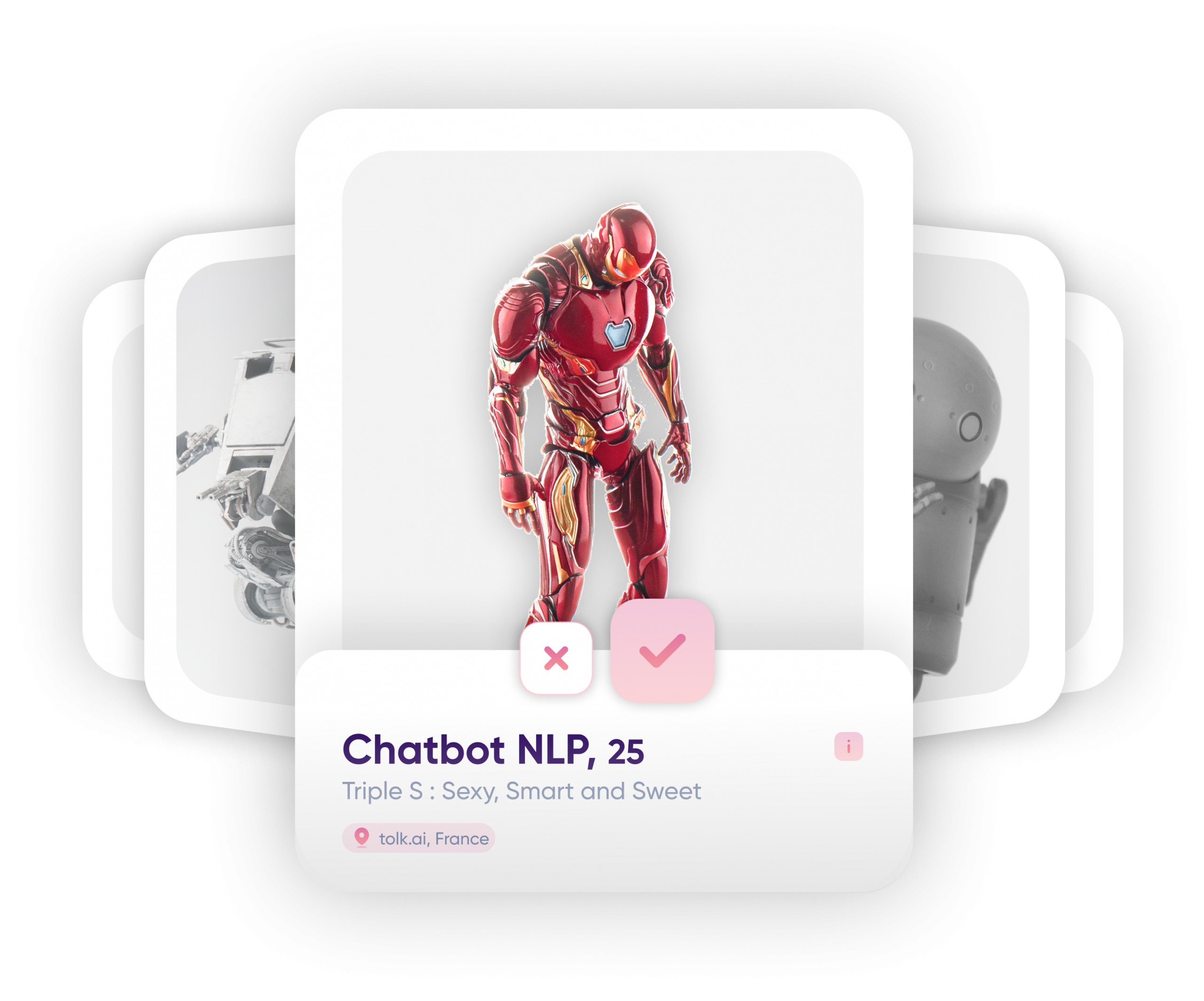
It would be a shame to miss out! In the years ahead, it is therefore essential for your business to deploy a chatbot, but not just any chatbot: you need a chatbot that speaks to humans like a human.

What are the different types of chatbot?

Businesses use different types of chatbots depending on their needs: voicebots, callbots, decision trees, and AI chatbots.

Here are the different types of chatbot commonly used by businesses:

The Voicebot

We have all encountered a voicebot at least once, and honestly it has often made us want to pull our hair out! 🤯

The voicebot is that voice asking us to give our answer out loud and which, after the 5th attempt, keeps saying “Sorry, I did not understand your response”.

😅

These voicebots can manage a conversation using natural language, but via voice instead of text. They are based on a computer program capable of interpreting human speech over the phone, using automatic language processing technology.

The Callbot

The callbot is equipped with speech recognition and synthesis capabilities, which allow it to perform semantic analysis.

In short, a callbot is capable of:

  • Understanding what the caller is expressing,
  • Identifying their needs,
  • Identifying and evaluating information relating to the caller’s identity,
  • Providing the user with relevant responses.

Not only can it transcribe spoken input into text, but this process is also very useful for continuously analysing customer conversations in order to improve callbot performance and avoid frustrating your customers over the phone!

Chatbot with a decision tree

The most basic chatbots follow a defined decision tree. In simpler terms, the bot guides the conversation with the user in order to provide predefined responses.

For example, at the start of a conversation with a user, a chatbot with a decision tree may present a dropdown list of options.

If the user selects “Support”, the chatbot can then automatically provide the phone number or email address for the relevant department.

These are simple chatbots, but I find them a bit dull! Perhaps with AI, we could make them a bit cooler? 🤔

Chatbot with artificial intelligence – NLP (Natural Language Processing)

Good news! 🥳

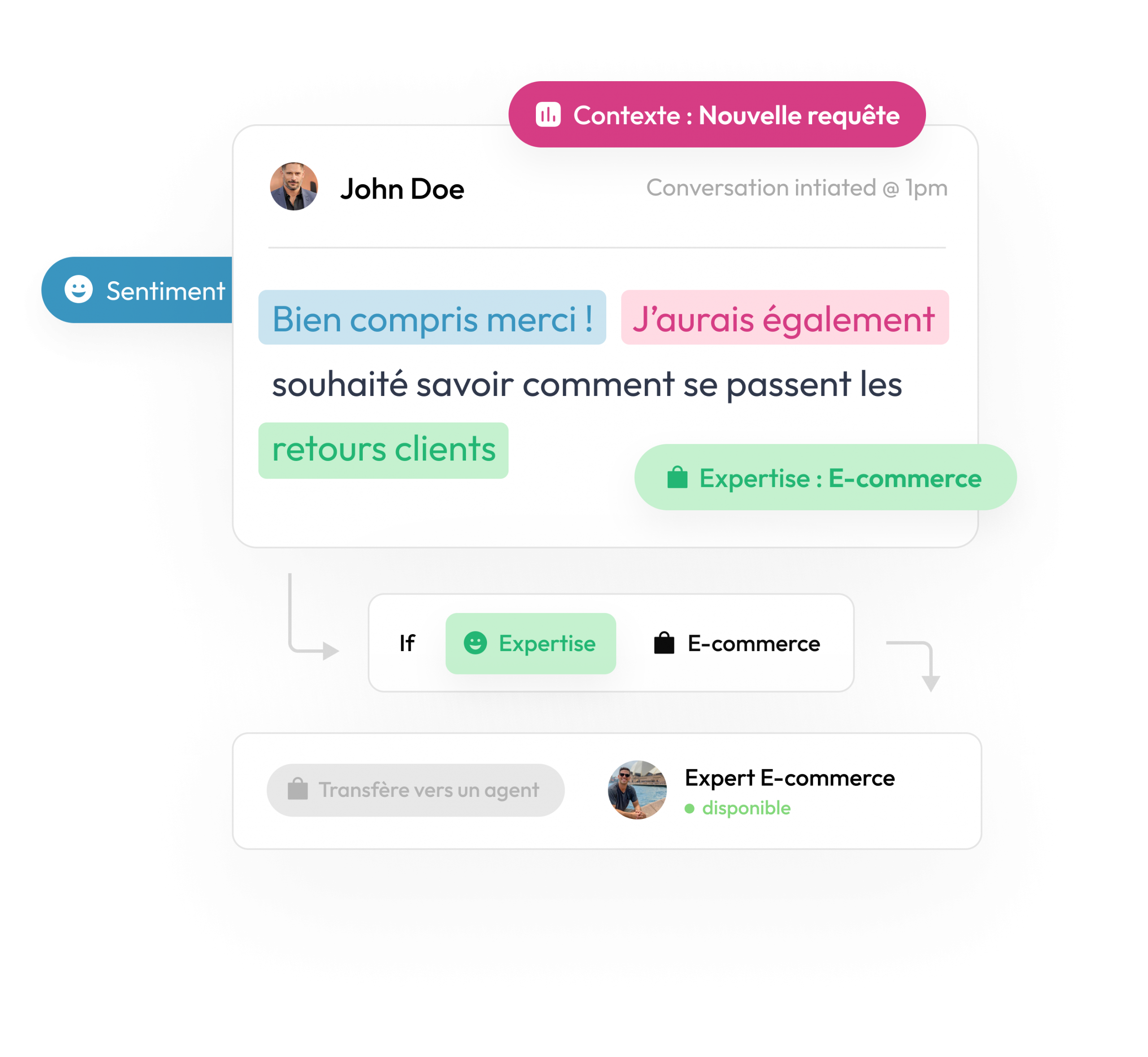
A chatbot can indeed rely on artificial intelligence to function. In this case, the program is able to understand human language and respond in an appropriate and personalised way.

This is achieved through NLP (Natural Language Processing), which uses automatic natural language processing. This processing consists of five steps:

  1. Understanding the question,
  2. Interpreting the meaning of the question in context,
  3. Choosing the right course of action,
  4. Formulating the response.

In other words, thanks to Machine Learning, the AI-based chatbot (the “intelligent chatbot”) understands the meaning of requests, suggests appropriate responses, keeps track of conversations, and analyses context. This type of chatbot becomes more intelligent over time, learns from its mistakes, and improves its responses, making it useful for your business and more enjoyable for your customers. At tolk.ai, we love these assistants: they all use AI and continuously improve thanks to our state-of-the-art technologies.

Chatbots are software programs that interact with users to provide help and information. They handle simple tasks, such as answering frequently asked questions, and more complex tasks, such as managing a hotel reservation. These assistants learn and adapt based on how users communicate. AI chatbots understand complex questions, adjust to user needs, and respond precisely to expectations, making the experience smoother.

This is exactly what tolk.ai offers: a high-value conversational experience based on these advanced technologies.

A demo speaks louder than words!

Experience the power of NLP now by booking a product tour today!

You now know everything about what a chatbot is!

Shopping Basket